A surprise in a quiet suburb
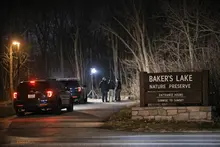
On a crisp Sunday in Mount Prospect, masked federal agents in fatigues fanned through backyards, unmarked SUVs idled at corners and a helicopter circled overhead as a detained man reportedly bolted in handcuffs — a tableau that jolted a quiet neighborhood and drew residents into confrontation and questions about the reach of immigration enforcement in the suburbs, according to Chicago Tribune.
Kim Fisher pulled up from a workout and saw “at least three people in fatigues and masks coming out from her backyard, stepping around a chain link fence,” as reported by Chicago Tribune. “And I said, ‘What the heck is that?’” Fisher said. “I did not say heck.” Fisher told the Tribune two of her children, ages 17 and 20, were home when agents came through the yard and that an agent claimed a suspect had left a jacket on the fence — a piece of clothing she said had been there for days, according to Chicago Tribune. “I was so angry that I was literally shaking,” Fisher said in the same account.
Neighbors described a swarm of activity: agents moving between blocks, cars being stopped and phones recording everywhere, as the search stretched late morning into early afternoon, according to Chicago Tribune.
What agencies were involved — and how it unfolded
Witnesses’ photos and videos captured badges and vests that read “U.S. Border Patrol” and “Customs and Border Protection,” according to Chicago Tribune. U.S. Customs and Border Protection — which includes the U.S. Border Patrol — operates under the Department of Homeland Security, whose mission includes enforcing customs and immigration laws at and between ports of entry, according to the Department of Homeland Security and U.S. Customs and Border Protection.
Agents at the scene told residents they were pursuing someone who had escaped into the neighborhood and later described the person as a “dangerous criminal” and a “Venezuelan gang member,” as reported by Chicago Tribune. The Department of Homeland Security could not immediately be reached for comment, according to Chicago Tribune.
Mount Prospect police said a community member called 911 around 11:15 a.m. to report someone running through a backyard near South Mount Prospect Road. After confirming federal immigration agents were conducting an operation, local officers left the area but continued responding to verify reports of “men with guns” were federal agents — which they were — a department spokesperson told the Tribune, according to Chicago Tribune. Agents departed around 1:30 p.m., and it was not immediately clear whether the person they sought was detained, as reported by Chicago Tribune.
Neighbors respond
The search spilled into residential driveways and across lawns, prompting residents to film, confront and shout at agents to leave, according to Chicago Tribune. A Palatine resident, visiting nearby Des Plaines, said she saw apparent federal agents chase a person into oncoming traffic before the pursuit moved into the neighborhood. “It was very strange,” she said. “Just very distressing. … It’s in our own backyard (that) this is happening,” as reported by Chicago Tribune.
Lisa Porter, who lives a couple of blocks from Fisher, said she yelled at Border Patrol agents parked near her house to leave, drawing on videos she had seen of Chicago residents confronting immigration officers, according to Chicago Tribune. “Just based on how I feel after this, I cannot imagine — or, I see what people are going through, and it is unspeakable,” Porter said. “And I’m a white lady who’s sitting in a nice suburb in Chicago.”
By the time local rapid-response advocates arrived, neighbors had already mobilized — honking and whistling until agents left, according to Chicago Tribune. Similar scenes were reported in nearby Rolling Meadows, where videos showed agents in CBP gear outside La Michoacana on Algonquin Road amid blaring car horns; in one clip, an agent pointed a weapon toward bystanders from a vehicle’s back seat, as reported by Chicago Tribune.
What we still don’t know
Key facts remained unsettled by day’s end: authorities had not publicly identified the escapee or the underlying charges, whether agents had warrants to enter private property or were operating under “hot pursuit” or other exigent circumstances, and whether any arrests resulted, according to Chicago Tribune. The lack of clarity amplified residents’ unease as agents moved through yards without asking permission, neighbors said, as reported by Chicago Tribune.
A broader backdrop for suburban enforcement
The Mount Prospect operation was part of increased activity under the Trump administration’s “Operation Midway Blitz” in the Chicago area since early September, with 1,500 arrests reported, according to Chicago Tribune. CBP and Border Patrol have historically focused on the border but have expanded interior operations in recent years, intensifying debate over how such tactics play out in residential neighborhoods, according to the Department of Homeland Security and analysis by the American Immigration Council.
Research on community responses indicates that highly visible enforcement — tactical gear, unmarked vehicles and aerial support — can heighten fear and reduce cooperation with authorities, especially in communities with significant immigrant populations, according to the Harvard Kennedy School and the American Immigration Council. Mount Prospect’s profile helps explain the intensity of reaction: the village of roughly 54,000 residents includes a notable Hispanic/Latino community and a median household income near $79,000, data from the U.S. Census Bureau shows.
If agents appear on your block
Legal-rights groups and constitutional resources outline steps residents can take to stay safe and informed during sudden enforcement actions:
- Prioritize safety: keep children and vulnerable people indoors and avoid any physical confrontation with armed officers, according to the American Civil Liberties Union.
- Ask about warrants: agents generally need a warrant or consent to enter a home; exigent circumstances such as hot pursuit may apply. You can ask to see a warrant, according to Cornell Law School — Legal Information Institute and the American Civil Liberties Union.
- Document from a distance: record times, vehicle details and actions without interfering, per the American Civil Liberties Union.
- Call local dispatch to verify coordination and report safety concerns, as advised by the American Civil Liberties Union.
The Mount Prospect manhunt stitched a national debate onto a neighborhood canvas: the federal imperative to apprehend a reportedly dangerous fugitive colliding with residents’ expectations of transparency and respect for private property. Studies on procedural justice suggest that minimal but timely explanations — and clear points of contact with local authorities — can bolster legitimacy and compliance during tense operations, according to the Harvard Kennedy School.
With enforcement activities continuing across the region — neighbors and advocates said scenes similar to Sunday’s have become more common — the test now is whether federal and local agencies can coordinate and communicate in ways that protect both public safety and civil liberties, even when the chase leads to a cul-de-sac, as reported by Chicago Tribune and framed by the Department of Homeland Security and the American Immigration Council.