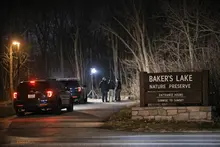
Barrington isn’t named anywhere in the court filings, but the stakes of a fast-moving legal fight in Chicago could ripple through this northwest suburb’s planning and public-safety playbooks. A federal judge has indefinitely extended an order blocking National Guard deployment in Illinois while both sides await possible action from the U.S. Supreme Court, according to Chicago Tribune. That means the legal boundaries around when troops could be sent into Illinois communities remain unsettled—an uncertainty that suburbs like Barrington will have to factor into contingency planning.
Legal backdrop
U.S. District Judge April Perry first issued a temporary restraining order (TRO) on Oct. 9 barring the Trump administration from deploying Guard units in Illinois. At a status hearing this week, she extended that order indefinitely. The administration itself proposed the extension, while also seeking a Supreme Court stay that could arrive “any day” and would allow deployment while appeals proceed, the Tribune reported. Perry told lawyers she would move quickly regardless of what happens in Washington, saying, “The problem with waiting is, every day we wait for them, you are losing time,” and later adding, “So we will not wait. If they rule today, we may have to reset the schedule tomorrow.”
The administration has asked to deploy about 700 troops in Illinois—roughly 300 from the Illinois National Guard and another 400 federalized from Texas—arguing that the TRO is part of a “disturbing and recurring pattern” that wrongly restricts presidential authority and endangers federal personnel and property. Illinois countered that Supreme Court intervention is premature and that the administration offered “no meaningful response” to the facts underpinning the TRO; the state’s filing argued much of the cited protest activity was constitutionally protected, according to the Tribune’s account.
A three-judge panel of the 7th U.S. Circuit Court of Appeals already declined to stay Perry’s order, finding her factual determinations were not “clearly erroneous” and concluding “the facts do not justify” the administration’s move in Illinois, as reported by Chicago Tribune. The panel—Judges Ilana Rovner, David Hamilton and Amy St. Eve—wrote that “spirited, sustained, and occasionally violent” protests against immigration policies “without more” do not amount to a rebellion requiring troop deployment.
How the process works—and what could happen next
Understanding the next steps requires a quick primer in federal procedure. A TRO is a short-term order meant to preserve the status quo. Parties can seek a stay (a temporary suspension) from an appellate court or the Supreme Court; if granted, the stay allows the challenged action to proceed while the case continues. Courts weigh factors like likelihood of success, irreparable harm and the public interest when considering injunctions and stays, according to Cornell Law School - Legal Information Institute.
Near term, the pathway looks like this:
- The Supreme Court could grant or deny a stay. A grant would permit deployment while appeals continue; a denial would keep the TRO in place as the district court moves toward an expedited injunction hearing or trial with live witnesses, as Judge Perry signaled, per the Tribune.
- Regardless of a stay, expect accelerated schedules in the district court to build a fuller factual record, which could shape subsequent appeals, per Cornell Law School - Legal Information Institute.
The frameworks likely to guide any Supreme Court review
If the justices step in, they will likely view the case through the Youngstown framework—set out in Youngstown Sheet & Tube Co. v. Sawyer—which classifies presidential power based on whether Congress has authorized, forbidden or remained silent on the action. That framework, along with interpretations of the Insurrection Act, forms the backbone of modern analysis of domestic troop deployments, as explained by Harvard Law Review. Those doctrines ask whether the executive has statutory backing and whether the factual record supports invoking it.
Beyond doctrine, history matters. The National Guard’s domestic roles—disaster response, civil disturbances, and at times immigration-related support—operate under different command arrangements: state active duty, Title 32 (state control with federal support), or Title 10 (federalized, under presidential control), as chronicled by Military Review. Which authority applies can determine whether Washington or the governor is in charge—and how local agencies interact with Guard units on the ground.
What this means locally
The materials provided do not describe specific incidents in Barrington. But the statewide litigation still matters here for practical reasons. If the Supreme Court grants a stay and deployment proceeds, municipalities across Illinois—suburbs included—could face rapid coordination demands with federalized or mixed-command Guard units, which raises questions about chain of command and mission scope that differ under Title 10 versus Title 32, per Military Review. If the stay is denied and the TRO remains, local agencies would continue operating without Guard involvement while the district court builds a fuller record.
Illinois’ broader political and demographic context can help explain how communities might react. The state’s roughly 12.8 million residents span an urban-rural divide, with the Chicago metro leaning Democratic and many rural counties voting Republican, according to U.S. Census Bureau summaries and election patterns highlighted by the Illinois State Board of Elections. Public opinion on using the Guard for immigration enforcement is mixed: national polling shows limited plurality support alongside concerns about militarization, Gallup has reported. In a suburb like Barrington, that likely translates into a split public conversation and a premium on clear communication from authorities about roles, rules and rights should any deployment occur.
The stakes, in plain terms
The administration frames the case as essential to protecting federal personnel and enforcing immigration law; the state argues the record does not justify troops and that many cited activities are protected speech, per Chicago Tribune. The 7th Circuit’s refusal to stay the TRO underscored that courts will scrutinize the factual basis for invoking extraordinary domestic military powers.
For Barrington residents, the practical questions are straightforward even if the law is not: Who would be in charge if troops appear in Illinois? For what missions? And how would local civil liberties be protected? Legal scholarship on Youngstown and the Insurrection Act suggests those answers turn on statutory authority and evidence, Harvard Law Review notes, while procedural guidance from Cornell Law School - Legal Information Institute indicates that any Supreme Court action could be swift—and could immediately alter the status quo.
In the coming days, watch for two signals. First, whether the Supreme Court grants a stay, which would open the door to deployment while appeals continue. Second, the district court’s scheduling of an expedited injunction hearing or trial, including live witnesses, which Judge Perry has said she will pursue promptly, according to the Tribune. Either development will shape how Illinois—and communities like Barrington—prepare for what comes next.