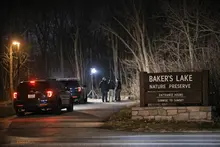
On most second and fourth Monday evenings, the decisions that shape Barrington’s taxes, streets and services come down to a simple ritual: a gavel at 6 p.m. for the Committee of the Whole, then a full Board meeting at 7:30 p.m. Residents can walk into Village Hall, step to the microphone, and be heard — or tune in from home on Channel 4, where every meeting airs live and is later replayed and archived for on-demand viewing, according to Village of Barrington (Village Board page). Public comments are welcome at every meeting.
How Village Hall runs
Barrington uses a council–manager form of government: elected officials set policy while a professional manager runs day-to-day operations. The Village Board itself is made up of the Village President and six Trustees, all elected at large, as described on Wikipedia — Barrington, Illinois. The Board’s regular rhythm — Committee of the Whole at 6 p.m. followed by the full Board at 7:30 p.m. on the second and fourth Mondays — aims to keep business predictable and accessible, with live broadcasts and recordings available to residents on Channel 4, according to Village of Barrington (Village Board page).
Who’s at the table
The current roster reflects a range of professional backgrounds and community ties. Summaries of the officials’ roles and election timelines include:
- Mike Moran, Village President — a longtime resident and business executive who was appointed Trustee in 2019, elected as Trustee in 2021 and then elected Village President in 2025, according to Wikipedia — Barrington, Illinois.
- Trustee Jason Lohmeyer — first elected in 2015 and re-elected in 2019 and 2023; a finance professional who chairs the Board’s Finance Committee, as summarized on Wikipedia — Barrington, Illinois.
- Trustee Todd Sholeen — appointed in 2015 and elected in 2017, 2021 and 2025; a treasury management officer active in local service groups, per Wikipedia — Barrington, Illinois.
- Trustee Jennifer Wondrasek — an engineer and community leader elected to four-year terms in 2017, 2021 and 2025, according to Wikipedia — Barrington, Illinois.
- Trustee Kate Duncan — an attorney focused on land use and development, elected in 2019 and 2023, as summarized by Wikipedia — Barrington, Illinois.
- Trustee Brian Prigge — a technology executive elected in 2023, according to Wikipedia — Barrington, Illinois.
- Trustee Lauren Klauer — a lifelong resident elected in 2025 with a background in community service and the wine and spirits industry, per Wikipedia — Barrington, Illinois.
- Jim Dillon, Village Clerk — a longtime resident re-elected in 2025 with experience in technical leadership roles, as noted by Wikipedia — Barrington, Illinois.
The civic backdrop: who Barrington is
Barrington is a small, established community with expectations to match. The 2020 census counted 10,722 residents with a median age of about 41 and household income topping $112,000, the census summary shows, according to Wikipedia — Barrington, Illinois. The village is predominantly White, with notable Asian and Hispanic or Latino communities. Those demographics help explain both the demand for high-quality municipal services and the need to keep outreach inclusive and accessible.
The Illinois factor
There’s a broader budget story at play in Illinois. The state has the most units of local government in the country — more than 6,000, not counting school districts — a patchwork that can add costs and complicate coordination, policy analysis from Illinois Policy Institute notes. For Barrington, that fragmentation can translate into pressure to manage property taxes carefully and to explore shared services or joint purchasing when it makes sense.
Voices and access
Barrington already opens the microphone at each meeting and pushes proceedings to Channel 4, but the briefing recommends a few low-lift steps that could broaden participation and make resident feedback more actionable:
- Multi-channel advance notices with plain-language summaries of major agenda items, at least a week in advance.
- Expanded public comment options — adding virtual live comments and formalizing written submissions before and after meetings, with staff responses.
- Structured input for big-ticket items such as the budget or major zoning changes, including pre-circulated materials and clear Q&A windows.
- “What changed and why” summaries after major votes, tying decisions to public input and staff recommendations.
- Simple metrics reported quarterly — attendance counts, number of commenters, written submissions and video views — to show what’s working and where outreach needs to improve.
These steps complement the existing meeting schedule, broadcast access and public comment welcome mat already in place, according to Village of Barrington (Village Board page).
Money and measurement
Given the budget pressures that come with Illinois’ governmental maze, tying fiscal discipline to transparency is a logical focus. The briefing recommends several priorities tailored to the Board’s Finance Committee — which is chaired by Trustee Jason Lohmeyer, a career finance executive, as summarized on Wikipedia — Barrington, Illinois:
- Adopt a rolling 3–5 year budget forecast with defined reserve targets and stress-tested scenarios.
- Pursue shared services or joint purchasing for back-office functions and fleet, where feasible.
- Benchmark per-capita service costs against comparable Illinois communities to spot efficiency gaps.
- Publish a concise quarterly fiscal dashboard for residents — revenues, spending, reserves and progress on strategic targets.
- Fold long-term capital planning into public engagement efforts so tradeoffs are clear before votes are cast.
Those moves, paired with consistent engagement metrics, would give residents a clearer line of sight into how priorities become policy, and how policy shows up in the tax bill.
A note on leadership listings
Readers may notice a quirk in public records. The municipal briefing lists Mike Moran as Village President following a 2025 election, while the locality summary on Wikipedia — Barrington, Illinois lists Karen Darch as President and Adam Frazier as Clerk. The materials indicate this likely reflects a timing or update difference between sources; residents seeking the most current officeholders should confirm with official records.
In an affluent, civically minded village of just over ten thousand, the stakes of routine governance are anything but small. Whether you show up at 6 p.m., tune in at 7:30, or read the follow-up the next morning, Barrington’s public business is designed to be seen and shaped by the people who live here — and the next step in that evolution may simply be making it even easier for every voice to count, according to Village of Barrington (Village Board page) and the civic recommendations outlined in the briefing.