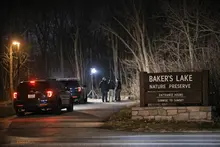
Midday scare at a busy Barrington corner
Shoppers and salon clients in downtown Barrington were startled late Friday morning when a 2023 Honda Accord jumped a curb and smashed into the front of two adjacent businesses along the 100 block of West Northwest Highway, at the southwest corner of Route 59 and Route 14. Police said the car struck the steel support beam between Suppes Inc. (113 West Northwest Highway) and Ben E. Salon Spa (123 West Northwest Highway), shattering large glass panes but leaving the building’s structure intact.
Barrington police and firefighters responded around 11 a.m. The driver, a 77-year-old woman from Fox River Grove, told officers she had been attempting to park in front of Ben E. Salon Spa when her foot slipped from the brake to the accelerator, causing the vehicle to surge forward over the curb and into the storefronts. While the initial 911 report described a car “through” the building, authorities said the Honda did not fully penetrate the structure and sustained only minor damage.
No injuries were reported to the driver or to anyone inside either business. Police said no citations were issued.
A jolt in a village that prizes safety
Barrington, home to about 11,049 residents, is a compact commercial hub surrounded by quiet neighborhoods and schools. Data compiled by HomeSnacks places the village’s median household income at roughly $150,714, with a poverty rate near 4.8% — figures that underscore its stability and resources.
Public safety indicators track similarly strong. An aggregation of 2024 FBI Uniform Crime Reporting data shows Barrington recorded about 11 violent crimes and 88 property crimes, well below state and national averages, according to BeautifyData. That statistical picture aligns with local sentiment: a community survey from AreaVibes found that 88% of respondents said there is virtually no crime and that they feel safe walking at night.
Even in communities where crime is rare, traffic mishaps can stir concern. Friday’s crash, which unfolded in broad daylight along a well-traveled commercial corridor, rattled bystanders but ultimately ended with the best outcome — no one hurt and the building’s steel column absorbing the impact.
What researchers say about older drivers and crash risk
One incident does not tell the story of a demographic, and researchers caution against broad brushstrokes. Studies do, however, highlight patterns that can inform family conversations and policy decisions. A University of Iowa team examining older driver errors has found age-related differences across common maneuvers. According to University of Iowa Public Health, "Drivers 75-84 age group were more likely to be culpable in right turn-related crashes compared to younger age groups, which may be related to reduced physical flexibility or visual declines."
Health factors often intersect with those driving challenges. A review in BMC Geriatrics links increased crash risk among older adults to a mix of conditions, including sensory impairment, central nervous system issues, cardiovascular disease, musculoskeletal problems, diabetes, and the cumulative effects of multiple medications — a reminder that risk is frequently multifactorial rather than rooted in age alone.
Vision, in particular, extends beyond the clarity measured on a standard eye chart. A study in JAMA Network reported that drivers with a 40% or greater reduction in their “useful field of view” — the ability to process and respond to visual information across the scene — were about 2.2 times more likely to be involved in a crash over three years. Researchers noted that such visual-processing deficits can predict risk even when visual acuity is acceptable.
The role of medications and alcohol also matters. An analysis summarized by MDPI points to medication-induced drowsiness or cognitive impairment, as well as alcohol, as modifiable risk factors that can raise the likelihood of crashes for older drivers. The findings suggest practical interventions — from medication reviews to sober driving commitments — can make a measurable difference.
A policy debate with local resonance
Illinois lawmakers have been weighing how to balance roadway safety with fairness for older motorists. Reporting by MyJournalCourier describes a proposed “Road Safety and Fairness Act” (House Bill 1226) that would let family members report drivers whose medical or cognitive conditions may undermine safe driving and would adjust renewal rules for older age brackets, including vision testing and, in some cases, driving tests for the oldest drivers.
Advocates argue that age-based mandates can unfairly target seniors when individualized assessments would better match risk. As MyJournalCourier reported, "The research clearly shows that older drivers are the safest drivers on our roadways, and we believe that singling them out to take an extra test is a type of age discrimination and has to end," said Philippe Largent, AARP Illinois Director.
That perspective sits alongside the research emphasis on functional ability — vision, flexibility, reaction time, and medication effects — rather than age alone. It suggests a middle ground: encourage safe, independent mobility for as long as possible while equipping families, clinicians, and licensing authorities with tools to identify and address specific risks.
After the crash, questions and next steps
Friday’s Barrington crash left behind broken glass and a stark reminder of how quickly routine errands can go awry. Police said the car’s impact was concentrated on the steel column between storefronts, mitigating damage; no citations were issued, and no one was hurt.
For a village that prides itself on safety, the episode may prompt renewed attention to practical measures — from parking-lot design and clear curb separations to family check-ins about medications and vision — that help keep routine trips uneventful. As research and policy discussions evolve, the focus here remains straightforward: ensuring neighbors of all ages can navigate Barrington’s streets and shopping corridors safely, without turning a simple stop into a scare.