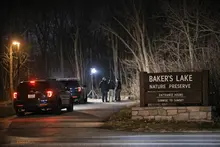
BARRINGTON, Ill. — Barrington residents are closely watching as a recent resolution passed by the Cook County Board aims to combat what some officials call deceptive tactics by U.S. Immigration and Customs Enforcement (ICE) within local courthouses.The resolution, introduced by County Commissioners Jessica Vasquez and Alma Anaya, seeks to address fears that ICE's increased presence in areas like Barrington could deter victims or their families from attending court sessions, especially those involving sensitive cases such as domestic violence. The resolution came after two recent detainments by ICE at Cook County domestic violence courthouses, which raised alarms about the potential chilling effects on community members.
Impacts and Reactions from Local Authorities
Barrington, a community traditionally supportive of progressive policies, may find itself in a balancing act between local and federal expectations. The resolution requests that all county departments, bureaus, and agencies maintain official communication about any immigration enforcement activity within county buildings or involving county staff.Sharone Mitchell, the Public Defender, has been vocal in urging the board and other county offices to consider limiting ICE operations inside and around court locations. His office is actively advocating for clear documentation and guaranteed options for remote court attendance, reinforcing the community's stance on safeguarding due process.However, opinions among various county offices are not uniform. When questioned, Mary Wisniewski, a spokeswoman for the Office of the Chief Judge, declined to comment on any established protocols in response to ICE activities at courthouses or on county property. Additionally, the Cook County sheriff’s office stated its adherence to existing state law and local ordinance while not disclosing any changes in policy following the new resolution. Sheriff Tom Dart's office is specifically tasked with documenting and denying ICE requests unless presented with a criminal warrant unrelated to immigration.
Protocol and Policies in Response to ICE
Circuit Court Clerk Mariyana Spyropoulos' office continues to align itself with county guidelines, which advise that staff should not hinder ICE searches. Instead, the protocol suggests that staff demand identification and a judicial warrant, and document instances of non-compliance.In a news conference held by County President Toni Preckwinkle, Vasquez, Anaya, and other county board members condemned ICE's use of tactics like unmarked cars and officers in plain clothes, citing them as contrary to fundamental due process rights. The sentiments echoed through Barrington, where community members prioritize transparency and accountability in local governance processes.
Community and Health Sector Response
Cook County Health, also under Preckwinkle's jurisdiction, has articulated policies ensuring that immigration authorities are met with clear limits, such as waiting in lobby areas and producing verified judicial warrants before proceeding. The facility has also reassured its patients about privacy and confidentiality by encouraging nonemergency telehealth services for those fearful of in-person visits due to potential ICE activity.While ICE presence remains minimal at Cook County Health locations, the vigilance continues. Alex Normington, a spokeswoman for CCH, shared that discussions with advocacy and government partners on immigration have been ongoing since earlier this year. These dialogues reflect a proactive stance in mitigating possible federal overreach, much to the relief of concerned locals.
Environmental Considerations and Legal Implications
Moreover, the county’s Forest Preserves department prepares its staff to handle potential ICE encounters by advising non-interference and stressing proper documentation. This particular sensitivity to enforcement may resonate with the environmentally conscious Barrington residents, who view the preserves as sanctuaries.As the county grapples with ICE's enforcement at courthouses, the implications could further influence both community engagement and public trust. Matt McGrath, a spokesman for Cook County State’s Attorney Eileen O’Neill Burke, acknowledged that ICE's courthouse activities might discourage essential witnesses and victims from attending proceedings, potentially impacting justice delivery. Accordingly, the office is updating its guidance for Victim/Witness specialists to maintain community cooperation.In the wake of evolving immigration policies, Barrington and its surrounding areas continue to adapt. The resolution’s nonbinding nature signifies a symbolic gesture, yet it represents a concerted effort by local leaders to maintain community integrity and protect residents amid broader enforcement narratives.