A regional crackdown, and a quiet suburb wonders
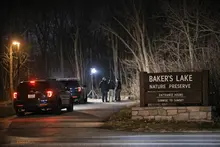
There is no public reporting in the materials provided of immigration raids or arrests in Barrington tied to the federal operation known as “Operation Midway Blitz.” This story draws on Chicago-area reporting, statewide policy context, demographic data and evidence-based analogies to assess how the ongoing enforcement surge could affect a suburban community like Barrington without asserting unverified local incidents.
The Department of Homeland Security announced on Sept. 8 it had launched “Operation Midway Blitz” in the Chicago region, saying it was aimed at “criminal illegal aliens” and spotlighting Illinois’ and Chicago’s sanctuary-oriented policies, according to Chicago Tribune. In the weeks that followed, the region saw aggressive tactics, protests and court fights that continue to shape the climate for suburbs across the metro area, the Tribune’s reporting shows.
What the region saw
The surge has been highly visible. Federal agents conducted actions in city neighborhoods and multiple suburbs, with incidents ranging from crowd-control measures on residential blocks to pursuits and traffic stops, according to Chicago Tribune. Tribune coverage detailed repeated tear-gas and pepper-ball deployments, most prominently around the ICE holding facility in Broadview, where protests became near-daily and arrests were reported. A federal judge ordered immigration agents to wear body cameras, citing concern about alleged violations during clashes and the use of maneuvers to disable vehicles, the Tribune reported.
The Tribune also documented episodes that rattled nearby communities: a fatal Sept. 12 shooting by agents in Franklin Park after a traffic stop, an Oct. 4 shooting in Brighton Park that drew an immediate street protest, a high-profile manhunt in Mount Prospect, and rideshare arrests at O’Hare. Video-circulated enforcement activity reached other suburbs including Elgin and Carpentersville, and the mayor of Waukegan publicly confronted agents during an arrest, according to Chicago Tribune.
On the political front, Gov. J.B. Pritzker and Mayor Brandon Johnson condemned federal tactics and warned residents about sweeps, while the administration pressed to position National Guard troops in the region, the Tribune reported. A federal judge in Chicago extended a restraining order blocking deployment in Illinois as the dispute moved toward the U.S. Supreme Court, even as Texas National Guard personnel appeared around Broadview and trained in far southwest suburban Elwood, according to Chicago Tribune.
The policy climate in Illinois
State law and local ordinances in Illinois limit how much local police can cooperate with federal immigration enforcement, a posture that has long fueled friction with federal agencies, according to AP News. That backdrop helps explain why coordination questions and jurisdictional disputes have flared during “Operation Midway Blitz,” and why municipalities may emphasize community reassurance over direct assistance to federal raids.
Those tensions have deep roots in the structure of immigration governance itself. Immigration enforcement authority was centralized at the federal level more than a century ago, establishing the framework that now collides at times with state and local priorities, according to historical materials from USCIS.
How a suburb like Barrington might feel it
While Barrington has not been cited in the provided reporting, proximity matters. The same commuter corridors, shopping districts and school networks that link Barrington to the city also connect its residents to the enforcement environment described above. Residents traveling to O’Hare or downtown could encounter enforcement activity, as the Tribune reported rideshare arrests at the airport and visible patrols in central Chicago during the blitz. Families with ties across the region may feel the indirect effects of Broadview’s protests and processing operations, which the Tribune chronicled at length.
Community anxiety is not limited to undocumented residents. The Tribune noted multiple instances in which U.S. citizens reported being detained or questioned during enforcement actions, including a brief detention in Elgin and a downtown incident involving a worker who said she was zip-tied before being released. Such cases heighten concerns about mistaken identity and civil liberties that are likely to resonate in any suburb.
Demographics also shape exposure. Chicago remains a diverse hub with about 2.72 million residents, including roughly 28.8% who identify as Hispanic or Latino, 28.4% Black or African American, 6.9% Asian and 39.0% White, data from the U.S. Census Bureau show. Social, economic and family networks extend into suburbs like Barrington, suggesting that enforcement visible in city neighborhoods can ripple outward through workplaces, schools and houses of worship.
Economic and social stakes
Large-scale enforcement can trigger short-term labor disruptions and consumer pullbacks, especially in sectors with significant immigrant workforces. A 2025 case study of intensified raids in Oxnard, California, documented a 20% to 40% drop in agricultural labor, billions in crop losses and higher food prices, illustrating how enforcement shocks can spill into the broader economy, according to arXiv. Barrington’s economy is service-heavy rather than agricultural, but the analogy suggests possible pressure points: restaurants and catering, residential construction and remodeling, cleaning services, caregiving and other informal or contingent labor.
Chicago reporting has also described fear-driven changes in daily life: parents and businesses distributing “know your rights” information, aldermen joining street patrols, and faith and community groups organizing around school dismissals to watch for agents, all according to Chicago Tribune. Similar protective habits could emerge anywhere anxiety rises, potentially affecting school attendance, clinic visits and small-business sales as households alter routines.
Preparing without panicking
Regional patterns offer a practical, lawful playbook that suburban civic groups can adapt, based on what Chicago neighborhoods have already done, according to Chicago Tribune:
- Share clear, multilingual rights information and civil legal-aid contacts; coordinate rapid-response hotlines with attorney networks.
Community leaders can also ask for clarity from federal and state officials about deconfliction protocols so that local police are not drawn into confrontations barred by state policy, a need underscored by Illinois’ limited cooperation framework described by AP News.
What we still don’t know — and why it matters locally
The Tribune’s roundup of “Operation Midway Blitz” emphasizes the breadth of incidents but does not provide a comprehensive, public tally of arrests, detentions or demographic breakdowns across the metro area, nor does it specify suburban-by-suburban counts. That leaves open questions that matter for Barrington: where, when and how often raids occur; who is being detained; and what the legal outcomes are, according to Chicago Tribune.
To assess localized impacts, officials and researchers would need standardized public reporting on arrests and outcomes, plus geographic detail that distinguishes city from suburban activity. Those data would also help evaluate coordination practices between federal agents and local police in a state with limited cooperation policies, an area of recurring tension noted by AP News. For households and businesses, tracking labor availability and consumer spending in service sectors would indicate whether economic ripples akin to those seen in Oxnard’s agriculture are materializing in the suburbs, an inference supported by the case-study evidence on enforcement shocks from arXiv.
The broad picture is clear from the region’s experience: a federal operation launched with a stated focus on “criminal illegal aliens” has unfolded amid protests, courtroom limits and political crossfire, as documented by Chicago Tribune. For Barrington, the absence of a headline-grabbing raid does not mean irrelevance. Commuters, customers, parishioners and students move daily through the same metro systems where the blitz has played out. That connective tissue is precisely why suburban leaders are watching, and why better data — matched with calm, rights-focused outreach — may be the most practical way to keep a small town steady while a big-city operation continues to cast a long shadow.