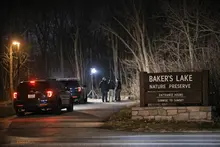
Parents in Waukegan and North Chicago are keeping children home as U.S. Border Patrol and Immigration and Customs Enforcement activity intensifies, prompting pleas for remote learning and a scramble by school leaders and lawmakers to respond, according to [Chicago Tribune](url).
Attendance drops and daily fear
District leaders say the pressure has mounted in recent weeks. Waukegan Community Unit School District 60 saw its first noticeable dip the week of Oct. 6, when attendance fell by 3% from normal levels, Superintendent Theresa Plascencia said in an email, as reported by [Chicago Tribune](url). In North Chicago School District 187, overall attendance across six schools averaged 85% over the past week, down from the usual 90% to 95%, and one day at Evelyn Alexander Elementary only 57% of students attended, according to [Chicago Tribune](url).
The fear is not abstract. Eight people were apprehended by immigration agents over a three-day stretch two blocks from Evelyn Alexander Elementary, district leaders told the paper, according to [Chicago Tribune](url). As after-school programs let out, North Chicago Superintendent John Price stood near 16th and Adams streets to guide families and offer reassurance, and the district added counseling supports during dismissal, as reported by [Chicago Tribune](url).
Plascencia said anxiety among families began to swell early this year with the federal government’s accelerated deportation push and spiked again amid an operation locally referred to as the “Midway Blitz,” according to [Chicago Tribune](url). “The fear is understandable given what’s happening in our community and others like it,” she said. “A very real concern we’ve heard from many of our families and staff relates to how enforcement actions are being carried out and who is being approached, which has added to the uncertainty and stress many are feeling,” Plascencia said in remarks reported by [Chicago Tribune](url).
What lawmakers are considering
Illinois currently allows districts to use only five e-learning days per academic year, a cap that was designed for weather or short-term emergencies and now limits school responses to prolonged fear-driven absences, according to the [Illinois State Legislature](url) and reporting by [Chicago Tribune](url). State Sens. Adriane Johnson, D-Buffalo Grove, and Mary Edly-Allen, D-Libertyville, said they are working with education officials to explore added flexibility for remote instruction while enforcement activity remains elevated, as reported by [Chicago Tribune](url).
“This is an emergency situation,” Johnson said. “People are afraid to leave their homes. Children are afraid to go to school. Parents are afraid to take them to school. We need to give (the schools) the tools to make the best decision. We don’t want anyone kidnapped (by ICE) on their way to school,” according to [Chicago Tribune](url). Edly-Allen said, “As these ICE raids become more and more frequent, especially around schools, we need to consider some flexibility, especially by those schools that are hardest hit. Our students should not be afraid to attend school, and currently that’s what’s happening,” as reported by [Chicago Tribune](url).
Plascencia has heard from families requesting remote options, but noted in a community email that the state currently permits only five e-learning days and added the district does not plan to use them now, prioritizing “safe, high-quality, in-person learning,” according to [Chicago Tribune](url).
How schools are responding
Price said his district has systems for students who must miss extended time—similar to when a child is hospitalized—so they can keep pace academically. “It only happens a few times a year a student is in the hospital or too sick to attend school,” Price said. “We come to them with the materials they need to do the work so they are caught up when they come back to school,” according to [Chicago Tribune](url).
Even as some families press for a remote pivot, Price is wary after the academic setbacks of the pandemic era. “The best place for a child to learn is in school,” he said, as reported by [Chicago Tribune](url). That caution echoes broader evidence that fully online learning can deepen inequities without strong guardrails, according to analyses summarized by [Education Week](url).
The counties’ demographic profile helps explain why the impact is acute. Lake County includes a sizable Hispanic and immigrant population and pronounced economic disparities within communities, which can intensify the effects of enforcement actions and complicate any shift to remote learning for families lacking devices or reliable broadband, according to the [U.S. Census Bureau](url) and the [Lake County Community Foundation](url). Federal guidance has historically treated schools as “sensitive locations” where immigration actions should generally be avoided, though application can vary, according to [ICE](url) and reporting by [Chicago Tribune](url).
Policy fixes and safeguards under discussion
Lawmakers exploring added flexibility face a trade-off: extended remote learning risks academic loss, while fear-driven absenteeism does the same. Policy analysts and educators point to steps that could widen options while protecting quality, according to the [Illinois State Legislature](url) and [Education Week](url):
- Create a targeted emergency waiver to exceed the five e-learning days when documented public-safety crises depress attendance, with simple notice and evidence requirements.
- Tie any waiver to equity safeguards: device and hotspot distribution, multilingual outreach, and supports for English learners and students with disabilities.
- Protect funding so districts aren’t penalized for crisis-driven absences, and require reporting on instructional quality and student engagement.
Districts can also strengthen day-to-day operations while attendance fluctuates. Recommended measures include brief multilingual absence surveys to understand why students are missing, daily dashboards to flag spikes, trauma-informed counseling, and privacy practices that safeguard family information, according to the [National Center for Education Statistics](url) and coverage in [Education Week](url).
Families and educators in Waukegan and North Chicago will be watching both Springfield and daily dismissal lines in the weeks ahead. State senators are weighing flexibility, district leaders are calibrating supports, and communities are navigating fear linked to operations like the locally referenced “Midway Blitz,” according to [Chicago Tribune](url). The balance they strike—between safety, instructional time and trust—will determine whether students can keep learning with minimal disruption as the situation evolves.