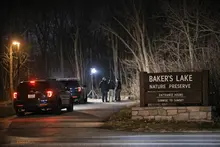
A late-night call from an anxious family turned into a swift recovery near Barrington when Lake County Sheriff’s Office K9 Lux, handled by Deputy John Forlenza, tracked down a missing teenager in mental crisis. Within minutes of being dispatched overnight from Thursday into Friday, Lux led deputies to the teen near a lake in the unincorporated Barrington area, where paramedics were called and transported the teen to a hospital for assistance.
How the Search Unfolded
The Lake County Sheriff’s Office said the teen’s family reported him missing a little after midnight Friday and that he was highly intoxicated and in mental crisis while on foot. Deputies were called around 12:22 a.m., and K9 Lux and Deputy John Forlenza were brought in shortly thereafter.
Lux began a track that led toward a nearby lake. At approximately 12:51 a.m., the canine team located the teenager, according to the sheriff’s office. Deputies immediately summoned paramedics, and the teen was transported to an area hospital for care. Authorities did not release the teen’s age or the name of the hospital.
The sheriff’s office praised the K9’s performance and lineage, writing Friday: “Good boy K9 Lux!! K9 Lux is already saving lives, following in the PawSteps of his dad, K9 Dax!”
A Canine Legacy
Lux’s arrival to the sheriff’s office was announced in February, marking the continuation of a notable bloodline. He is the son of the late K9 Dax, a highly decorated member of the Lake County canine unit whose impact on the agency resonated well beyond individual cases.
Dax suffered severe injuries on March 3, 2024, while apprehending a person who had committed several felonies and was fleeing near Zion. He injured his neck and spine, resulting in temporary paralysis in his hindquarters, and was later diagnosed with cervical and thoracolumbar Intervertebral Disc Disease (IVDD) and lumbosacral IVDD exacerbated during the apprehension. The severity of those injuries led to his early retirement. Dax died on April 12, 2024. Friday’s recovery underscores the way the unit’s training, culture, and K9 lineage continue to shape operations as Lux steps into a demanding role.
Why K9 Teams Matter in Searches
K9 units are routinely deployed when speed and terrain complicate a search, especially in wooded or lakeside areas at night. Industry reporting cited in the Canine Technology Journal notes that pairing canines’ olfactory strengths with modern tools can further shorten search times and improve safety. The American Society for the Prevention of Cruelty to Animals (ASPCA) has similarly highlighted the effectiveness of trained K9 teams in reducing search durations and improving recovery outcomes.
As agencies refine their approach, the Canine Technology Journal recommends integrating tools that complement dogs’ abilities—such as GPS-enabled collars to document tracks and aid handler coordination, drone reconnaissance for situational awareness, and standardized digital logs to capture start and end times, conditions, and outcomes for after-action learning. Lake County’s prompt response in this case, from the 12:22 a.m. call to locating the teen at approximately 12:51 a.m., illustrates the operational value of well-prepared K9 teams.
Mental Health and Response
The sheriff’s office reported that the teenager was in mental crisis and highly intoxicated—factors that can increase risk and complicate searches near water or in low-visibility terrain. Guidance summarized by the National Institute of Mental Health (NIMH) emphasizes coordinated care for youths in crisis, from immediate safety to follow-up support. Recommendations drawn from that guidance include:
- Co-dispatch EMS and crisis-trained personnel when calls involve possible intoxication or acute mental distress, alongside specialized search assets such as K9 teams.
- Establish a rapid family liaison to gather relevant behavioral history and keep relatives informed during fast-moving searches.
- Ensure post-incident follow-up with community mental health resources and school or peer-support networks after a hospital evaluation.
Community Context and Next Steps
Lake County’s emphasis on community policing, as reflected in a 2023 sheriff’s office report on local trends, frames incidents like this one: responsive, trust-centered operations that draw on specialized resources when seconds count. Public-facing communication—timely updates, clear instructions for reporting sightings, and coordination with volunteer efforts—has been shown in local initiatives to help accelerate safe outcomes while avoiding duplication or hazards.
In the Barrington-area case, authorities moved quickly after the family’s call and relied on a K9 team that found the teen in under 30 minutes from the initial notification. The agency did not release additional personal or medical information about the teenager, a common practice in such cases. What is clear is the human dimension: a family’s worry in the small hours, a rapid response, and a recovery that, by all indications, averted further danger.
For the Lake County Sheriff’s K9 unit, the operation also carried a sense of continuity. Lux’s performance—swift, precise, and calm in the dark—evoked the legacy of Dax while standing on its own merits. As the county continues to balance public safety with evolving mental health needs, cases like this one show how trained teams, clear protocols, and thoughtful care can make the difference when it matters most.