CHICAGO — A federal judge in Chicago on Thursday said she is “profoundly concerned” that immigration agents are violating her orders restricting the use of tear gas on media and protesters, and she ordered Immigration and Customs Enforcement Field Director Russell Hott to appear in court Monday to answer questions. U.S. District Judge Sarah Ellis also said she is considering modifying her temporary restraining order to require that any body-worn cameras agents are wearing be turned on during encounters with the public.
The judge’s concerns
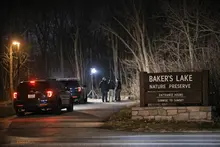
Ellis’s frustration was evident during an hourlong hearing that focused on alleged violations by immigration officers in recent clashes, including a confrontation on Chicago’s East Side on Oct. 14 after agents used what she characterized as a controversial and potentially dangerous maneuver to disable a fleeing vehicle, then deployed tear gas at a tense gathering that followed. A Department of Homeland Security spokeswoman alleged protesters were throwing rocks at officers.
“I am profoundly concerned about what has been happening over the last week, since I entered this order,” Ellis said. “I live in Chicago if folks haven’t noticed,” she said. “And I’m not blind, right?…I’m getting images and seeing images on the news, in the paper, reading reports where I’m having concerns about my order being followed.”
Sean Skedzielewski, an attorney representing the government, laid blame with “one-sided and selectively edited media reports.” Ellis said Hott, the ICE field director, would be in the best position to update her on how the agencies are adapting to follow her orders.
What the order says
The hearing came a week after Ellis ruled that federal agents violated the rights of news reporters and protesters responding to immigration arrests in Chicago, and she restricted future actions against them. Her temporary restraining order forbids agents from firing tear gas and other projectiles at peaceful protesters, clergy or journalists unless they pose an immediate threat of physical harm to a person, and to do so only after issuing warnings. Agents were also ordered to stop dispersing people if they have a lawful right to be at a location.
“The actions taken by some of those federal agents clearly violated the Constitution,” the judge said in her ruling. “Individuals are allowed to protest. They are allowed to speak. That is guaranteed by the First Amendment to our Constitution, and it is a bedrock right that upholds our democracy.”
The ruling stems from a lawsuit filed by the Chicago Headline Club, journalists’ unions, Block Club Chicago and other media outlets and reporters against Homeland Security Secretary Kristi Noem and other federal agencies and agents. The order only applies in the northern court district of Illinois and did not apply to President Donald Trump, who was named in the suit.
Government pushback and competing claims
Attorneys for the U.S. Department of Justice have objected to the temporary restraining order and told the judge that the order “will be unworkable and will cause a lot of problems.” According to a motion filed by the plaintiffs ahead of Thursday’s hearing, the government “believes the TRO has not been violated at all.”
The plaintiffs asked for expedited discovery ahead of a hearing next week on a full injunction, citing what they described as ongoing incidents “in which federal officers appear to be using violence, tear gas, and other munitions against protestors and journalists.” Their filing asserted, “Young children and even babies appear to have been subjected to the indiscriminate use of tear gas by defendants’ officers,” and added, “And it does not appear that defendants’ agents are consistently wearing prominently displayed visible identification.”
While noting that some lawlessness has occurred, Ellis cited several examples of alleged unprovoked attacks by federal agents as part of her reasoning for the restrictions she imposed last week. She suggested Thursday that requiring activation of body-worn cameras during public encounters could help establish a clearer record of what is happening on the street.
What comes next
Ellis ordered Hott to appear Monday and indicated she wants a detailed accounting of how agents are training for and complying with her directives. She underscored that the constitutional standards underlying her order are not optional: “If everybody kind of follows what’s outlined in this TRO, conforms their decisions and behavior to what the Constitution demands, then, you know, all copacetic and we can go on and live our lives,” she said.
The pending request for a preliminary injunction is expected to test whether Ellis’s emergency restrictions will be extended or modified. Any changes could include the body-camera activation requirement she raised from the bench, along with clarifications around warnings before crowd dispersals and the conditions under which chemical agents may be used.
Limits of the public record
Some parts of the picture remain incomplete. The available filings do not include detailed internal reports from ICE or Border Patrol about the Oct. 14 incident, and there were no statements from immigration activists or civil rights organizations in materials presented to the court. The record also lacks statistical data on tear gas use in similar confrontations.
As the court presses for answers and the parties prepare for next week’s hearing, the scope of federal agents’ authority on Chicago’s streets — and the guardrails the Constitution imposes — will be tested again in open court. The Associated Press contributed.