Texas Guard’s Illinois mission narrows after fitness removals and a judge’s order
Seven members of the Texas National Guard were sent home from suburban Elwood after officials determined they did not meet mission standards for physical fitness, the Texas Military Department said Tuesday. The move, carried out during a pre-mission validation at the U.S. Army Reserve training center where Guard members have been garrisoned since Oct. 7, comes as a federal court fight limits what the deployment can do in Illinois.
What happened at the Elwood base
A Texas Military Department spokesperson said the service members were replaced “during the pre-mission validation process” at the Army Reserve site in Elwood and added, “These service members were returned to home station.” The department did not specify which standards the seven failed to meet.
The decision followed a burst of social media ridicule directed at some soldiers’ appearance after widely circulated photographs showed heavier guardsmen at the base. U.S. Defense Secretary Pete Hegseth, who told top military leaders last month that it was “tiring” to see “fat troops,” signaled support for the removals, posting, “Standards are back at The @DeptofWar” on X alongside coverage of the Texas Guard’s action. In a statement, the Texas Military Department said it “echoes Secretary Hegseth’s message to the force: ‘Our standards will be high, uncompromising, and clear.’”
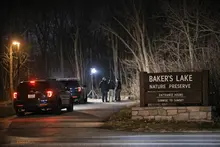
Guard members have been training and staging at the Elwood facility, a roughly 3,600-acre Army Reserve property about 50 miles southwest of Chicago. In recent days, uniformed troops have been seen at the site, with a few appearing to carry rifles while walking the grounds.
The legal fight over the deployment
A federal judge in Chicago last week blocked the Trump administration from deploying National Guard troops to Chicago and the rest of Illinois as part of an immigration enforcement push. In her oral ruling from the bench, U.S. District Judge April Perry said National Guard troops are “not trained in de-escalation or other extremely important law enforcement functions that would help to quell these problems,” and allowing additional troops into Chicago “will only add fuel to the fire that the defendants themselves have started.”
The Justice Department pushed back in a Friday night filing, arguing Perry’s order “improperly impinges on the Commander in Chief’s supervision of military operations, countermands a military directive to officers in the field, and endangers federal personnel and property.”
Over the weekend, the 7th U.S. Circuit Court of Appeals denied an emergency request to stay Perry’s order but allowed Guard members already in Illinois to remain during the appeal. “Members of the National Guard do not need to return to their home states unless further ordered by a court to do so,” the appellate order said.
What residents are seeing now
There has been no visible presence of the Texas National Guard since last week’s ruling, according to the reporting provided. Before the judge’s decision, Guard members were spotted outside the U.S. Immigration and Customs Enforcement holding facility in Broadview, where they did not interact with protesters. On the day troops arrived in Will County, at least one resident, Erin Gallagher, was photographed protesting at the Elwood training center.
The Pentagon has not clarified what the Guard members already in Illinois will be doing while the legal appeal plays out. Officials have not detailed any plans for public-facing duties, and the court order currently bars additional deployments into the state.
Standards and unanswered questions
The Texas Military Department did not disclose the specific fitness benchmarks applied in Elwood, leaving open whether the seven soldiers fell short on particular tests or broader height and weight requirements. The department’s statement emphasized alignment with Hegseth’s call for rigorous standards but did not provide the criteria or any remediation steps for those who did not pass.
The scrutiny on soldiers’ appearance — spurred by photos taken as units assembled in Elwood on Oct. 7 and 8 — has added a public relations dimension to a deployment already under legal constraint. While the Guard’s validation process is routine before missions, the lack of detail about the standards used in this case means the public record does not explain how commanders measured readiness or how quickly replacements were sourced.
What this means locally
For communities near the Elwood Army Reserve training center and around the Broadview ICE facility, the practical impact is narrowed for now. The appellate decision permits the Texas Guard personnel already in Illinois to stay in place, but Judge Perry’s order restricts additional troop movements, and the Pentagon has not said what tasks the remaining unit members will perform as the case progresses.
Residents can expect:
- A continued Guard presence at the Elwood training center as the legal process unfolds.
- No expansion of the deployment into Chicago or elsewhere in Illinois unless a court allows it.
- Limited public-facing activity by the Guard, based on the lack of visible presence since the ruling and the absence of clarified duties.
The coming weeks will hinge on the appeals process and whether federal officials provide more detail on the Guard’s role while in-state. For now, the episode underscores two realities shaping this mission at home: a courtroom’s control over its scope and leadership’s insistence on fitness standards that, at least for seven soldiers in Elwood, proved decisive.