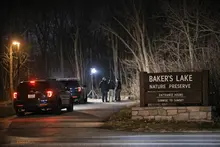
BARRINGTON HILLS — The Village Board of Trustees meets tonight at 6:30 PM with three headline votes on the agenda: authorizing $190,000.00 in Motor Fuel Tax funds for 2026 snow removal, an ordinance to amend a special use permit for a multi-purpose interior prayer and assembly space at 160 Hawthorne Road, and advice and consent on appointing Marsha McClary to fill a trustee vacancy created by the resignation of Darby Hills, according to Barrington Hills Observer.
What’s on the agenda
- Use of Motor Fuel Tax (MFT) funds: $190,000.00 earmarked for snow removal in 2026
- Special use amendment: authorize construction of a multi-purpose interior prayer and assembly space at 160 Hawthorne Road
- Board appointment: advice and consent to approve the President’s appointment of Marsha McClary to fill the unexpired term of Trustee Darby Hills and assume her positions on standing committees
Those items come as Barrington Hills heads into budget season in a community known for large-lot residential living and high expectations for basic services. The village is an affluent, low-density municipality spanning four counties — Cook, Kane, Lake and McHenry — with a 2020 population of 4,114 and a median household income of roughly $157,000, according to Wikipedia.
Recent board actions underscore a long-running fiscal posture. The village marked its 10th consecutive year without a property tax increase for fiscal year 2023, the board reported late last year, according to Village of Barrington Hills — budget context. The current vacancy traces back to the 2023 seating of a refreshed board, when new trustees — including Darby Hills — were sworn in, according to Village of Barrington Hills.
Money for winter
The board will consider authorizing $190,000.00 in MFT funds for next year’s snow removal program, the agenda shows, according to Barrington Hills Observer. In Illinois, cities and villages draw on state-distributed MFT dollars for transportation needs such as road maintenance, resurfacing and winter operations, with allocations driven by a statutory formula that factors local population and road mileage, according to the Illinois Department of Transportation.
Operationally, an earmark at this level signals how the village intends to cover core winter costs — from plowing to salt and equipment — using a dedicated, state-derived revenue stream rather than general property taxes. That aligns with the board’s recent pattern of fiscal restraint, as documented by its tax-levy decisions, according to Village of Barrington Hills — budget context. Strategically, the spending plan also sets guardrails for how much MFT remains for other road priorities in 2026.
What residents don’t yet see are several basic numbers that can frame the decision:
- Total projected 2026 MFT revenue and the share represented by $190,000.00
- Whether snow-removal services rely on in-house crews, contractors or a mix
- Contingency plans if winter severity pushes costs above the authorization
Those details were not included in the agenda listing, based on the announcement, according to Barrington Hills Observer. IDOT guidance emphasizes allowable uses and routine reporting for MFT spending; a brief public explainer tying the $190,000.00 to projected revenues, contracting approach and contingencies would give residents a clear line of sight into how the village is applying those rules, according to the Illinois Department of Transportation.
A proposed prayer and assembly space
The board is set to vote on an ordinance granting an amendment to an existing special use permit to allow construction of a multi-purpose interior prayer and assembly space at 160 Hawthorne Road, according to Barrington Hills Observer.
For a village defined by low residential density and rural character, land-use changes often prompt close attention to practical impacts — traffic, parking, occupancy, hours of operation and how a site plan fits surrounding uses — considerations that tend to matter in places like Barrington Hills, according to Wikipedia. The agenda notice does not describe those specifics, so residents will be looking to the board’s discussion for the operational parameters that typically accompany a special use amendment, according to Barrington Hills Observer.
Clarity around neutral, generally applicable standards — building and fire codes, parking ratios, and any conditions tailored to mitigate demonstrable impacts — is a common way municipal boards document their decisions and set expectations for applicants and neighbors. While the agenda item frames the “what,” tonight’s deliberation may supply the “how,” including any conditions the board believes are needed to balance site use and community fit.
Who’s joining the Board
The board will also consider advice and consent to approve the President’s appointment of Marsha McClary to fill the unexpired term of Trustee Darby Hills, whose resignation created a vacancy, and to assume her positions on standing committees of the Board of Trustees, according to Barrington Hills Observer.
Appointments mid-term can shift committee workloads and perspectives. Hills was part of the cohort of new trustees sworn in during 2023, according to Village of Barrington Hills. If confirmed, McClary would step into both the voting role and the committee assignments tied to the vacancy, giving the board a full complement heading into winter operations and the 2026 planning cycle.
What’s missing
The agenda highlights the voting items but does not provide additional backup such as projected MFT revenue totals, snow-removal contract summaries, or a site plan and operating parameters for the 160 Hawthorne Road proposal, according to Barrington Hills Observer. IDOT’s framework for MFT spending offers a ready-made outline for the snow allocation — tying dollars to allowable uses and annual reporting — that the village can mirror in a short public brief, according to the Illinois Department of Transportation.
As the board moves through tonight’s agenda, the through-line is straightforward: funding the plows, weighing a sensitive land-use amendment, and keeping the dais fully staffed. For residents in a community that prizes both its open-road feel and prudent budgeting, the details the board provides — how $190,000.00 fits within 2026 MFT revenues, what conditions shape the special use at 160 Hawthorne Road, and how a new trustee will slot into committee work — will tell as much of the story as the votes themselves.