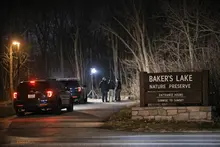
BARRINGTON, Ill. — The supplied notes contain no direct references to Barrington. Even so, a county-level look at last week’s arrests — including the detention of a Wisconsin man on a Texas human trafficking warrant — carries implications for Barrington readers because law enforcement resources, victim services and prevention strategies operate across Lake County’s shared systems.
What the county reported
According to the provided Lake County Sheriff’s Office report, deputies recorded 14 arrests between Oct. 6 and Oct. 12, 2025. The week’s cases ranged from traffic and public-order offenses to retail thefts and one out-of-state warrant related to human trafficking.
The report lists two DUI arrests: Javier M. Gonzalez, 61, who had a warrant for driving under the influence and was arrested Oct. 6 in Waukegan with a court date of Oct. 31, and Joshua Davis Cordero, 21, of Ingleside, accused of DUI alcohol and no insurance, arrested Oct. 9 with a court date of Nov. 12. Three drivers faced suspended registration or license and insurance-related charges: Alexis D. Little, 27, of Zion, arrested Oct. 6 in Beach Park; Maria D. Carmona, 23, of Waukegan, arrested Oct. 6 in Beach Park; and Joe Robinson, 58, of Beach Park, arrested Oct. 10 in unincorporated Waukegan. Each was released following arrest, according to the report.
Two people were arrested on retail theft allegations: Shuntel D. Richardson, 18, of North Chicago, on Oct. 9 in Waukegan (court date Oct. 30), and Tyler Jason Ruefer, 34, of unincorporated Grayslake, on Oct. 10 (court date Oct. 28). Two others were arrested on disorderly conduct: Michael David Edmonds, Jr., 34, of Union Grove, on Oct. 8 in Waukegan (court date Oct. 30), and Robert J. Schulze, 33, of unincorporated Grayslake, on Oct. 10 with additional charges of resisting arrest and obstructing a peace officer (court date Nov. 5).
Deputies also reported two arrests tied to protection orders. Willie L. Ranson, 68, of Waukegan, was arrested Oct. 7 and assigned a court date of Nov. 5. Daniel W. Johnson, 35, of Waukegan, was arrested Oct. 7 and, according to the report, was sentenced to 12 months conditional discharge. In other cases, Brandon Ozuna, 18, of unincorporated Grayslake, was arrested Oct. 6 on a warrant for aggravated fleeing to elude (court date Nov. 3), and Robin A. Biles, 24, of Zion, was arrested Oct. 10 in Beach Park on allegations including aggravated battery to a peace officer, driving while license suspended, and resisting arrest (court date Nov. 18). The report notes that criminal charges represent accusations by the state and may be dropped or reduced.
A warrant from Texas
The most serious entry in the week’s blotter involves Eric M. Bickwermert, 37, of Kenosha, Wisconsin. The Sheriff’s Office report states Bickwermert was arrested Oct. 6 in the 38200 block of N. Sheridan Road, Beach Park, on an active warrant out of Texas for human trafficking. He was being detained at the Lake County Jail at the time of the report with a court date of Oct. 17.
Key details are not included in the provided materials. The sanitized report does not specify the alleged conduct, whether any victims were identified in Illinois, which trafficking statute is at issue, if extradition to Texas has been initiated, or whether additional local charges were being considered. The provided analysis notes that this kind of arrest aligns with national trends of increased trafficking reports and inter-state enforcement, citing contextual materials that reference a 24% rise in reported cases to the National Human Trafficking Hotline in 2022 compared with 2021. Those materials emphasize that without case-level facts — such as victim status, modality (labor or sex trafficking), or federal involvement — the community impact remains unclear.
Why this matters for Barrington
Lake County’s population sits near 700,000, according to the provided context pack, and the county’s policing strategies and social services are shared across suburban and urban communities. Even without a Barrington incident in this week’s report, interjurisdictional cases — like a Texas warrant executed in Beach Park — can involve countywide resources, from extradition coordination to victim services, that touch every municipality.
The supplied analysis also observes geographic clustering of arrestees in denser areas such as Waukegan, Grayslake and Zion during this one-week snapshot. While a single week does not establish a trend, the observation reflects a broader county pattern in which urban centers generate a larger share of reported incidents. For Barrington officials and residents, that suggests county-level prevention, service capacity and coordinated policing still shape local safety — even when specific addresses lie miles away.
Legal and policy context
According to the provided context materials, Illinois law imposes severe penalties for human trafficking, with multi-year prison terms that can escalate based on aggravating factors. For DUI, state law pairs fines and license sanctions with education and treatment programs for first-time offenders, alongside harsher penalties for repeat offenses. These frameworks influence how prosecutors and courts handle cases and inform diversion or rehabilitation options where appropriate.
The provided synthesis recommends that, when an arrest involves an out-of-state trafficking warrant, law enforcement prioritize interjurisdictional coordination: confirming warrant paperwork, preserving potential evidence, initiating extradition discussions, and convening a multidisciplinary team to assess victim needs. Those steps, drawn from the synthesis of the Lake County Sheriff’s Office context and National Human Trafficking Hotline reporting, aim to protect victims and preserve prosecutorial options.
Recommendations and community takeaways
Beyond the trafficking case, the mix of DUI, retail theft and public-order arrests points to prevention opportunities across the county. The provided synthesis — drawing on the Lake County Sheriff’s Office strategic context, Illinois DUI reporting and local community services materials — outlines several steps for consideration:
- Strengthen victim services and referral pathways by formalizing law enforcement–NGO protocols, funding embedded victim advocates, and expanding emergency shelter and trauma-informed support.
- Expand DUI prevention with first-offender education, data-driven checkpoints, and partnerships with substance-use treatment providers for diversion where appropriate.
- Support retailers with coordinated reporting and loss-prevention training, and use problem-oriented policing in hotspots to combine enforcement with environmental design and social services.
- Maintain transparent, non-sensitive public data on arrest patterns to build trust and encourage community cooperation.
As the Sheriff’s Office report shows, a single week can encompass routine traffic stops, serious interpersonal conflicts and a notable interstate warrant. For Barrington, the absence of a local address in the blotter does not mean the issues are remote. County-level responses — from extradition coordination to victim care and prevention programming — shape public safety across municipal lines, and the provided materials suggest stakeholders should watch for follow-up on the human trafficking case while continuing to invest in the everyday work that reduces recurring offenses.