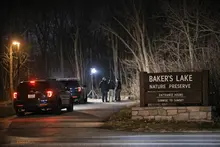
A fast-moving scam meets a faster community response
On August 28, a vigilant teller at a Barrington bank noticed something was off. An elderly client was trying to withdraw large amounts of cash under suspicious circumstances. Within hours, Sergeant Chad Streff and Officers Jeff Risner and Brian Hansen of the Barrington Police Department had mobilized, coordinated with multiple banks, engaged the client’s family, and ultimately prevented a would-be loss of $30,000 tied to a fake sweepstakes windfall.
The bank told police the client had already taken out $10,000 earlier that day at another branch and was attempting another $10,000 withdrawal. During the investigation, it emerged the client had first tried to pull $30,000 in cash — a request the bank refused due to fraud concerns. Officers went to the residence, made repeated calls and, as the situation escalated, warned neighboring branches to head off further withdrawals.
Working as a team, one officer stayed with the client while another contacted the client’s son to explain what was unfolding. When the client returned home with $30,000 in cash and resisted police efforts, officers kept the conversation going. They followed the client to the post office, where the client attempted to mail a package to an individual whose name they could only recall by checking a slip of paper. Police Chief David Daigle said the observations made it clear the client was under the influence of a scammer.
With the son’s help, officers learned the pitch: the client believed they had won $10.5 million from Publishers Clearing House and a new Mercedes, and that the $30,000 was needed to pay “taxes” to claim the prize. Their intervention stopped the money from leaving the community. “Thanks to the quick actions and persistence of our officers — and the vigilance of a local bank — a resident was spared from losing $30,000 to a scam this week,” Daigle said. “Scammers often use urgent phone calls, emails, or in-person visits to pressure their victims, and they can target anyone. If something doesn’t feel right, pause before acting and call 911.”
How it unfolded
- A local bank in Barrington alerted police on August 28 after recognizing unusual cash-withdrawal behavior.
- The bank reported the client had already withdrawn $10,000 earlier the same day and was attempting another $10,000.
- Sergeant Streff and Officers Risner and Hansen went to the residence, placed multiple calls, and proactively contacted nearby branches to prevent additional withdrawals.
- One officer remained with the client while another reached the client’s son to advise him of the ongoing scam.
- Officers followed the client to the post office and observed actions consistent with someone being directed by a scammer.
- With family involvement, officers confirmed the scammer had invoked the name of Publishers Clearing House, promising a $10.5 million prize and a Mercedes to justify an upfront “tax” payment.
Why older adults are in the crosshairs
The Barrington case mirrors common tactics flagged by the Better Business Bureau’s summaries in the provided materials: sweepstakes and lottery claims, impersonation of trusted names, high-pressure demands to act quickly, and instructions to move money via cash or other hard-to-trace methods. The client’s belief in a mega-prize and the urgent push to withdraw cash — even to the point of mailing a package — fit the pattern.
Nationally, the scale is sobering. The Federal Trade Commission reported more than $1.7 billion in losses from fraud targeting older adults in 2021, with an average reported loss of roughly $9,175 per incident, according to the provided materials. Against that backdrop, a single prevented loss of $30,000 underscores both the financial stakes and the value of rapid intervention.
Barrington’s demographic reality
Local context matters. Barrington has roughly 10,000 residents, a median household income near $70,000, and about 20% of residents are age 65 or older, according to the demographic note included in the provided materials. That concentration of seniors — many on fixed incomes and often targeted by scammers — makes swift coordination between banks and police more than a best practice; it’s a community safeguard.
What local institutions can do right now
The August 28 response showcased effective coordination in real time. To make that vigilance routine — not situational — the following steps, drawn from the supplied guidance for police, banks, and seniors, can help:
- For police departments (supplied law-enforcement guidance):
- Formalize rapid-alert protocols with local banks for suspicious withdrawals.
- Train officers and dispatchers on prevalent scam types and de-escalation strategies when victims resist help.
- Designate an elder-fraud liaison to coordinate with banks, families, and social services.
- Where lawful, work with banks on temporary holds or verification windows when credible fraud indicators emerge.
- Engage trusted family members or caregivers quickly to counteract scammer influence.
- For banks (supplied financial-institution guidance):
- Equip frontline staff to spot red flags such as repeated large cash withdrawals or pressure to send money in unusual ways.
- Establish clear escalation paths for high-risk transactions and, where permitted, short verification holds.
- Offer opt-in safeguards for seniors, including withdrawal alerts and lower cash limits.
- Use verified call-back procedures based on customer records — not numbers provided by a caller — before releasing large sums.
- Keep standing lines of communication with local law enforcement while respecting privacy requirements.
- For seniors and caregivers (supplied consumer guidance):
- Never pay fees or taxes to claim a prize; legitimate sweepstakes don’t require upfront payments.
- Verify independently. Don’t use phone numbers or emails provided by the person making the claim.
- Involve someone you trust — a family member, friend, or your bank — before moving large sums.
- Ask your bank about withdrawal alerts or a brief verification period for large cash transactions.
- Save records of suspicious contacts and report them to your bank and local police.
What we still don’t know
The public materials describing the August 28 incident do not indicate whether the scammer was identified or prosecuted. They also don’t spell out the exact banking procedures used to slow or stop the cash movements between branches, or whether a formal multi-bank protocol exists locally. Those gaps are common in fast-moving fraud interventions, which often prioritize stopping the loss in the moment and protecting victim privacy.
What is clear is the model that worked: a bank spotted anomalies; officers showed up, stuck with it, involved family, and stayed on the case long enough to break the spell. In a village where a significant share of neighbors are older adults, that kind of persistence can be the difference between a costly mistake and a lesson learned. The next step — for banks, police, and families — is to make this kind of coordination second nature, so the promise of a too-good-to-be-true prize doesn’t find an open door.