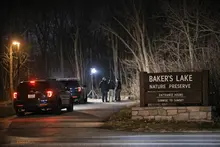
Barrington sits at the quiet edge of a metropolitan region now at the center of a national test: who decides when troops patrol American streets. On Wednesday, a federal judge in Chicago indefinitely extended an order blocking the White House from deploying National Guard troops to Illinois, a move that keeps any military presence off local roads for now but leaves suburbs like Barrington watching the U.S. Supreme Court for the next move. As reported by Chicago Tribune, the restraining order—first issued Oct. 9—now remains in place while the case proceeds, unless the high court steps in.
How the Ruling Holds in Place
U.S. District Judge April Perry, of the U.S. District Court for the Northern District of Illinois, granted the indefinite extension at a status hearing where lawyers for the administration asked to prolong the order until a final judgment on the merits. The request came with a caveat: the Supreme Court could grant an emergency stay at any time, effectively allowing the president to deploy troops while appeals play out, according to Chicago Tribune.
The state agreed to the extension but put concerns on the record about the litigation’s pacing and tactics. Christopher Wells of the Illinois attorney general’s office said Trump’s lawyers were “very concerned about possible gamesmanship in other courts and how what’s happening here is going to be portrayed,” the Tribune reported. Judge Perry pressed ahead, ordering the parties to prepare for expedited discovery and telling them she would not idle for the justices. “The problem with waiting is, every day we wait for them, you are losing time,” she said. “So we will not wait. If they rule today, we may have to reset the schedule tomorrow.” She added: “It does make sense to me that we take a deliberative approach here. These are complicated legal issues that have not been explored by the courts above us in a very long time,” according to Chicago Tribune.
Where the Appeals Stand
The extension follows a unanimous decision by a three-judge panel of the 7th U.S. Circuit Court of Appeals declining to stay Judge Perry’s order. The panel concluded her findings were not “clearly erroneous” and that “the facts do not justify” deploying troops in Illinois at this stage, according to the opinion. In a key passage, the court wrote: “The spirited, sustained, and occasionally violent actions of demonstrators in protest of the federal government immigration policies and actions, without more, does not give rise to a danger of rebellion against the government’s authority,” the panel of Judges Ilana Rovner, David Hamilton and Amy St. Eve stated.
What Officials Are Preparing For
The administration has turned to the U.S. Supreme Court, seeking emergency relief after the 7th Circuit’s denial. The justices have several options, each with distinct consequences, according to Supreme Court procedures and case reporting by the Chicago Tribune:
- Deny emergency relief, which would keep Judge Perry’s order in place and bar any deployment while the case continues.
- Grant a temporary stay, allowing the administration to deploy troops while appeals proceed.
- Take the case for expedited review on the merits, setting up a rapid ruling that could establish nationwide precedent on presidential authority to federalize and deploy forces domestically.
The stakes are immediate. If a stay is granted, the administration could move forward on a deployment of about 700 troops—roughly 300 from the Illinois National Guard and another 400 federalized units—sought to “protect federal personnel and property,” filings say. Those numbers and the federalization approach track with typical Guard structures described by the National Guard Bureau, while the legal thresholds for using troops in domestic roles turn on statutes and constitutional limits.
The Law Behind the Fight
At the heart of the dispute are doctrines that rarely take center stage. The president can “federalize” state Guard units under specific statutes and, in rare cases, invoke the Insurrection Act to quell unrest or enforce federal law. At the same time, the Posse Comitatus Act restricts the use of federal military forces for domestic law enforcement, absent explicit authorization from Congress. Together, these principles define the narrow path for deploying troops at home, as explained by Cornell Law School.
In filings to the Supreme Court, the administration portrayed the district court’s order as part of a “disturbing and recurring pattern” that “improperly impinges on the President’s authority and needlessly endangers federal personnel and property,” according to Chicago Tribune. Illinois, in turn, urged the court not to intervene at this stage, arguing that the administration offered “no meaningful response” to the factual basis for the Oct. 9 order and that much of the activity cited by federal declarants was constitutionally protected protest. “In fact, applicants do not even attempt to rebut that much of the activity the declarants complained about was constitutionally protected,” the state wrote, the Tribune reported.
Why Local Leaders Are Watching
A federally directed Guard presence in the Chicago region would be politically and socially fraught. The metro area’s complexity and diversity—reflected in decades of demographic shifts and community concerns over policing and public safety—shape how any military deployment would be perceived. Data from the U.S. Census Bureau underscore the region’s demographic variety, while local reporting has detailed heightened sensitivity to militarized responses, particularly around protests and immigration enforcement, according to Chicago Tribune.
Barrington, like many Chicago suburbs, would likely see ripple effects rather than convoys at its doorstep: shifts in regional law enforcement posture, community activism, and school and business contingency planning, all influenced by what happens downtown. The knowledge bundle contains no Barrington-specific statements from officials, and there is limited data in the record about protest activity in the village itself. That absence is notable—and a reminder that the legal fight centers on broader statewide authority and federal power, not just city blocks in Chicago.
A Case With National Reach—and Procedural Risks
Beyond the immediate question of whether troops can deploy now, the litigation could set a national precedent on the outer limits of presidential power over state forces. An expedited decision by the justices could either heighten the evidentiary bar for domestic deployments or broaden executive latitude in emergencies—outcomes with clear implications for future conflicts between governors and the White House, as outlined in the case analysis and appellate filings referenced by the Chicago Tribune.
Lawyers on both sides have also flagged the dangers of procedural maneuvering. The state put concerns about “gamesmanship” on the record, warning that rapid-fire motions in multiple courts can compress the evidentiary record and distort the narrative, according to Chicago Tribune. The 7th Circuit’s insistence on a sturdy factual foundation—and its refusal to short-circuit the district court’s process—suggests that the appellate judges want facts, not just assertions, before any troops move, per the 7th U.S. Circuit Court of Appeals.
For now, Judge Perry’s order holds, preserving a status quo that keeps Guard units in their armories and state officials in the driver’s seat—unless the Supreme Court says otherwise. If the justices act, the impact will be felt from Chicago’s core to suburban communities like Barrington, where the legal lines between federal force and local life are suddenly anything but abstract.